
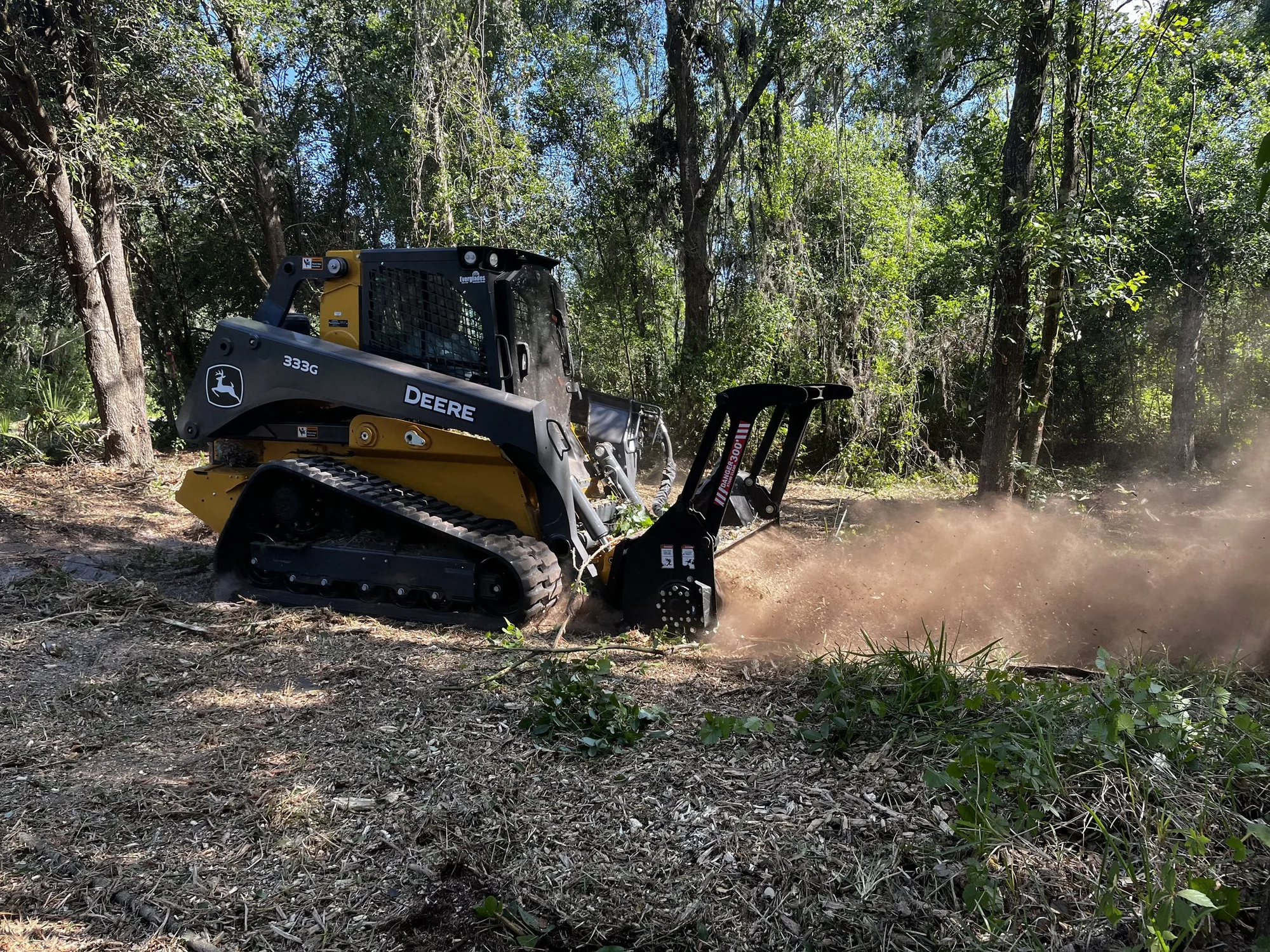
Harnessing Nature's Shield: Forestry Mulching in Wildfire Prevention and Responsible Land Management
January 19, 2024
The Wildfire Menace
Rising Threat of Wildfires:
Wildfires present an escalating danger driven by dry conditions, flammable vegetation, and human activities. The severity and frequency of these events have increased significantly, creating an urgent need for preventive strategies.
Ecosystem Disruption:
Beyond immediate threats to people and property, wildfires damage ecosystems through biodiversity loss, soil degradation, and lasting ecological harm.
The Forestry Mulching Solution
Creating Firebreaks:
Forestry mulching strategically removes vegetation to establish natural firebreaks. These cleared zones function as barriers that slow wildfire spread and provide essential protection against advancing flames.
Reducing Fuel Load:
Accumulated dry vegetation intensifies wildfires. Forestry mulching addresses this by reducing available combustible material, significantly lowering rapid fire spread risk.
Responsible Land Management
Preserving Native Vegetation:
Unlike aggressive land clearing, forestry mulching selectively removes vegetation while maintaining native species, supporting biodiversity and ecological balance.
Minimizing Soil Erosion:
The method reduces soil disturbance, preventing erosion and protecting soil structure integrity.
Enhancing Wildlife Habitats:
Careful vegetation clearing preserves key habitats, enabling responsible land management while supporting diverse ecosystems.
Collaborative Efforts
Community Involvement:
Wildfire prevention requires partnerships among landowners, local authorities, and environmental agencies for comprehensive regional strategies.
Education and Awareness:
Community education about forestry mulching benefits empowers informed land management decisions balancing safety with environmental sustainability.