
Nurturing Earth's Foundation: Strategies for Maintaining Soil Health After Land Clearing
January 19, 2024
Understanding the Impact
Soil Disturbance and Erosion Risk:
Land clearing through conventional methods like bulldozing disrupts soil structure, increasing erosion vulnerability and threatening soil fertility and stability.
Loss of Organic Matter:
Vegetation removal eliminates organic matter essential to soil fertility, reducing nutrient content and overall soil health.
Strategies for Soil Health Maintenance
Mulching as a Protective Blanket:
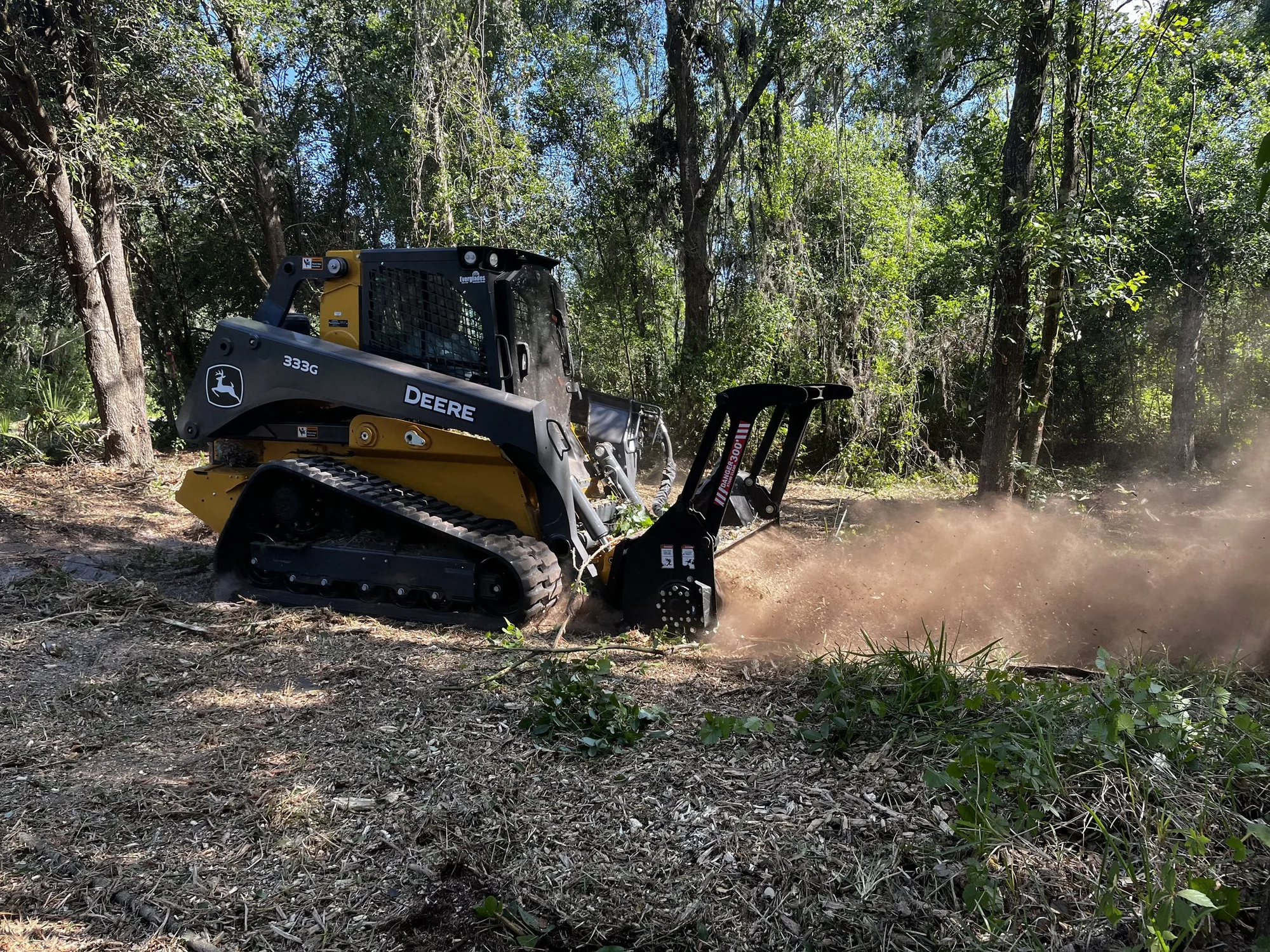
Applying mulch to cleared areas protects soil by retaining moisture, suppressing weeds, and regulating temperature. Forestry mulching specifically provides natural mulch during the clearing process itself.
Cover Crops for Regeneration:
Post-clearing cover crops establish protective barriers against rain and wind erosion while promoting soil regeneration.
Terracing and Contour Plowing:
On slopes, these techniques slow water runoff, allowing infiltration and preventing topsoil loss.
Soil Amendments for Restoration
Organic Matter Restoration:
Reintroducing compost and well-rotted manure replenishes nutrients and supports plant growth.
Minimizing Compaction:
Heavy machinery causes soil compaction. Aeration and deep-rooted cover crops improve water infiltration and root development.
Best Practices for Sustainable Land Management
Preserve Existing Vegetation:
Selective clearing through forestry mulching maintains root systems and organic matter while minimizing soil impact.
Monitoring and Maintenance:
Regular area monitoring and prompt erosion control ensure long-term soil stability.